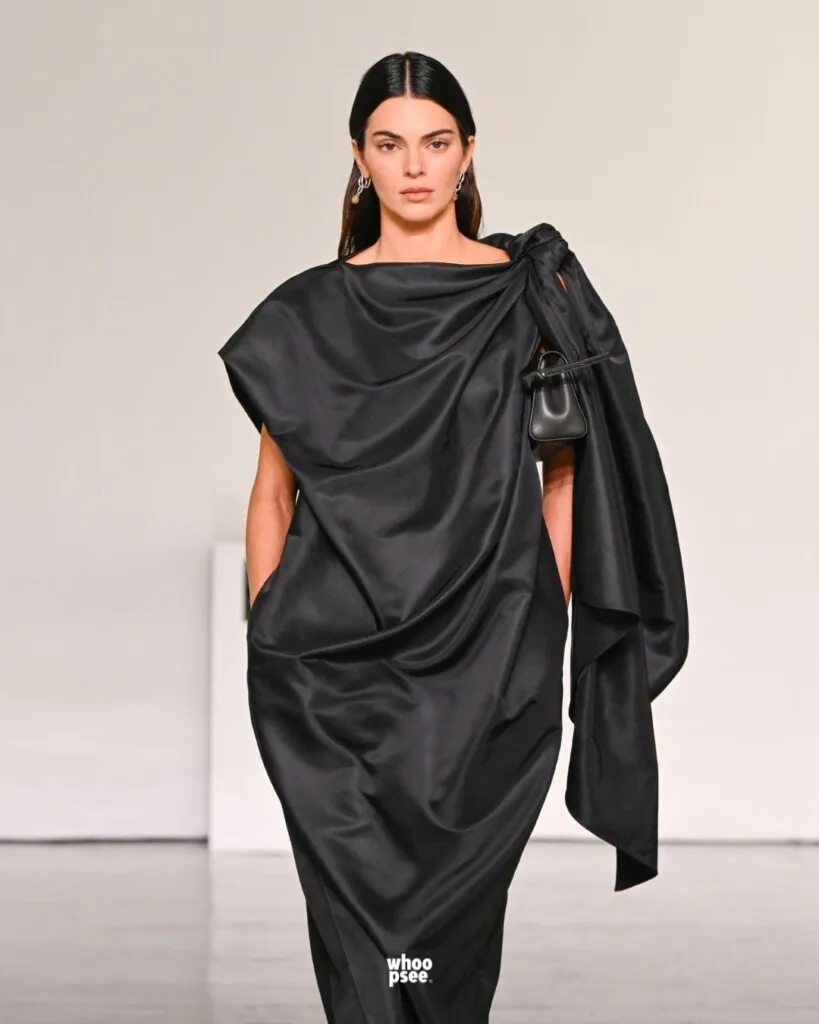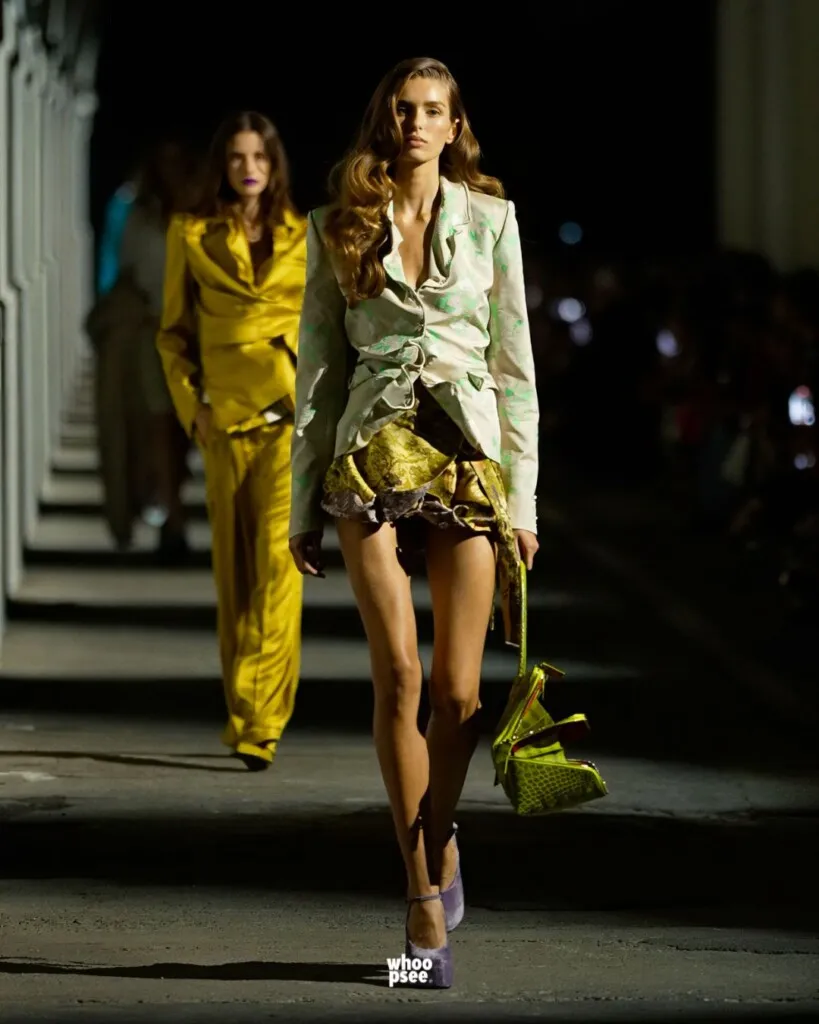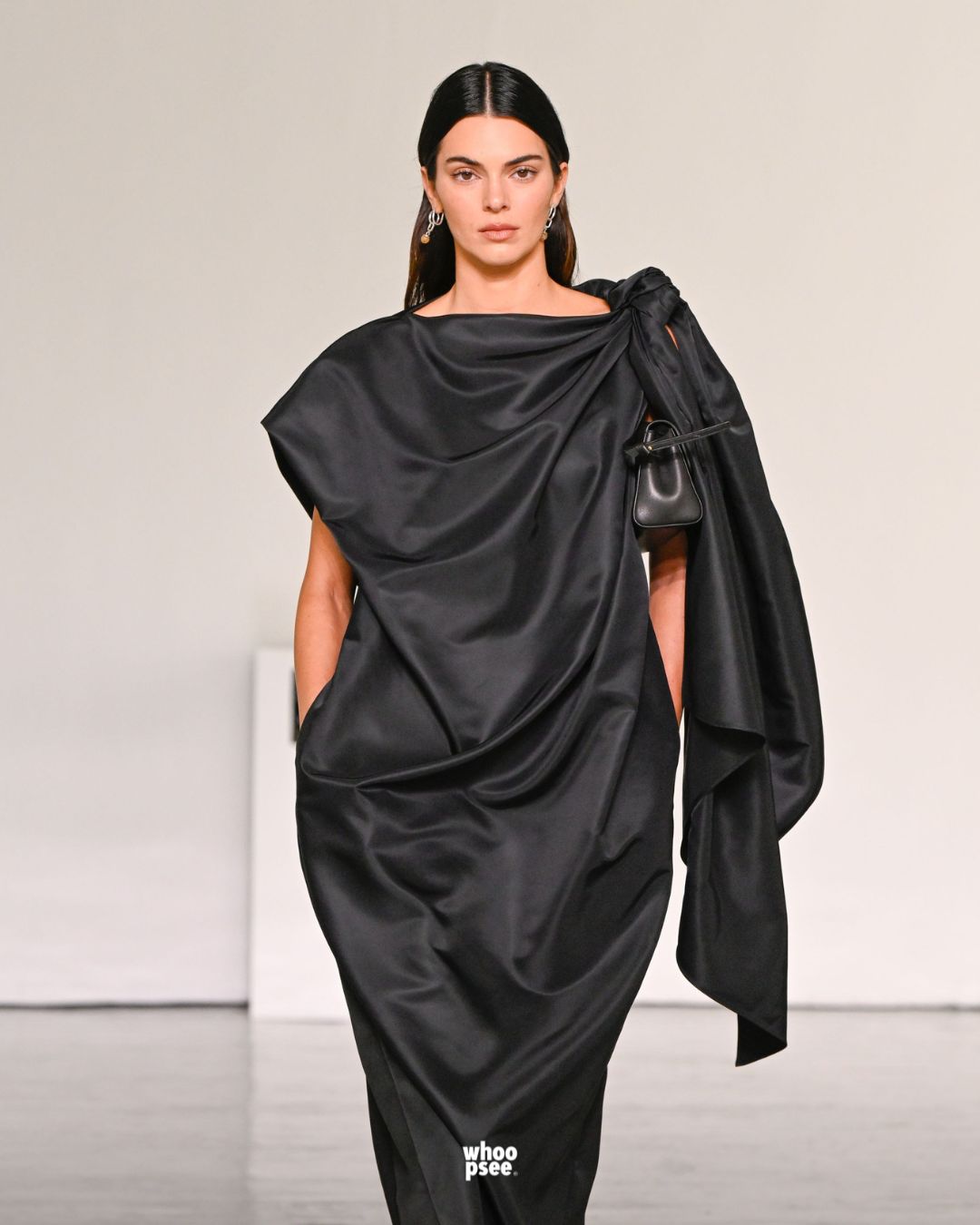
Bottega Veneta is now a fashion house in constant evolution: it has its own codes, but always finds a way to avoid being defined by a single aesthetic, preferring to explore different styles without ever losing its identity. That’s why, ever since Louise Trotter took the reins of the Italian fashion house, before every runway show we know which elements will likely feel familiar, but we can hardly predict the form in which we’ll encounter them. From the Intrecciato—a historic signature now reinterpreted in countless ways—to the rigorous yet irreverent silhouettes introduced by the creative director. Rigorous because they echo a minimalism that is not so much stylistic as it is structural: it doesn’t necessarily mean subtracting or stripping everything down to the essentials, but rather constructing each garment based on precise proportions, carefully studied volumes, and clean lines, where even what appears softest or most fluid retains a recognizable structure. Irreverent because, within this order, there is always something seemingly left to chance that actually appears to be the most carefully considered element. A loosely tied knot, a shirt collar deliberately out of place, a proportion that disrupts the balance just when it seemed to have been achieved.
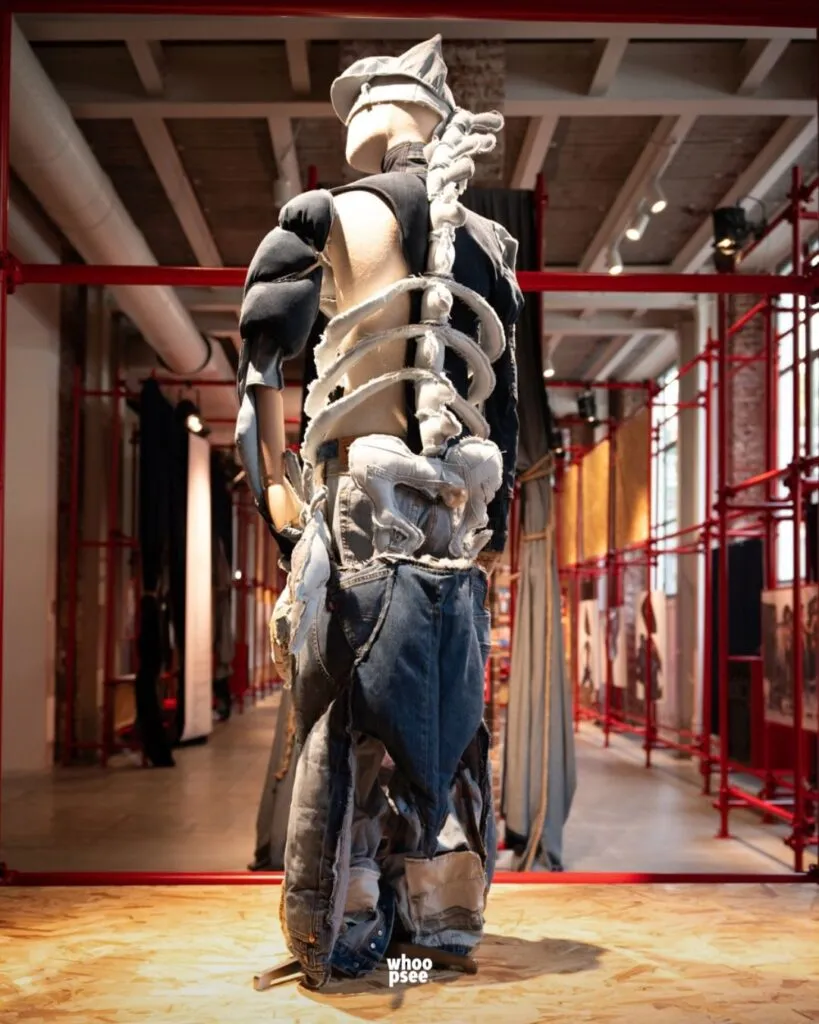
Then there are the textile techniques that have become Louise Trotter’s signature, revealed bit by bit: a fringe that takes center stage until it reaches the floor and creates a train; appliqués that cease to be mere decorations and become the very fabric of the garment; a sculptural collar; or drapings that alter the silhouettes and their movement. These are elements we’ve come to recognize in the language of the new Bottega Veneta, elements that ensure each runway show is consistent with the one before it, yet never entirely predictable. Dense weaves coexist with more open crochet; threads and appliqués create deliberately disordered textures, while some details appear on the verge of unraveling despite being the evident result of an extremely complex construction. Tying, weaving, layering, fraying, draping: Louise Trotter seems to draw on Bottega Veneta’s artisanal heritage to expand its meaning, transforming a recognizable technique into a broader approach to constructing garments.
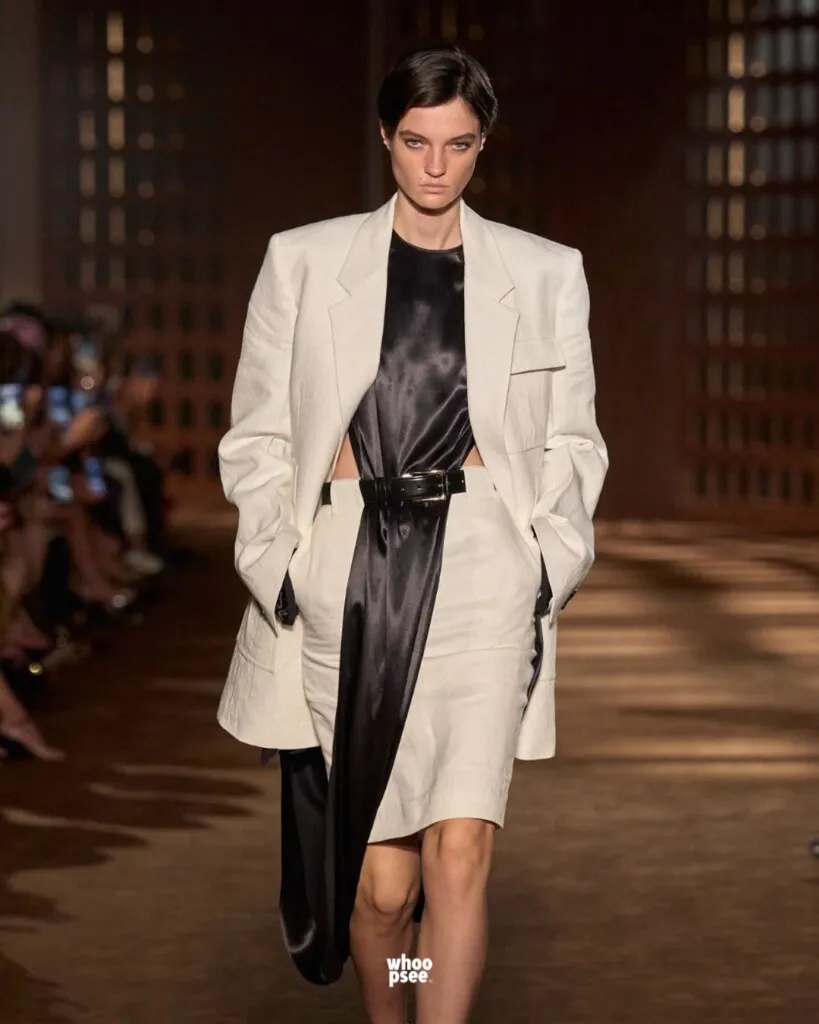
The color palette in this collection also follows a very precise direction: more neutral shades, such as white and ivory, all-black looks, military green, and leather browns alternate with less predictable combinations: pink and purple, pink and butter yellow, black and lilac, red and white. These combinations go beyond the colors we’re used to associating with Bottega Veneta—including green—to create, once again, a constantly evolving aesthetic. A significant focus is placed on hats, featuring different shapes, colors, and materials: a small-scale illustration of the house’s skill in working with construction and materials. Speaking of accessories, flat shoes confirm a trend that has become increasingly prevalent in recent collections, shifting from minimalist, anatomically designed styles to lace-ups with a more naïve allure. Handbags inevitably continue to play a central role, but what’s also striking is the way they’re presented: stacked, filled, and piled up, as personal items rather than mere accessories. The Intrecciato pattern remains the star, not only on handbags, but also reappears in the details of the garments, changing in size, construction, and function, demonstrating once again how a historic design language can continue to evolve without losing its distinctive character.
There’s no shortage of sparkling accents, which stand out not only for their luminosity but also for their unusual designs. Here, too, however, the most spectacular element is balanced by something extremely restrained: a luxurious fabric can be paired with a simple tailored shirt, immediately bringing the look back to that sense of order from which we began. It’s a continuous balancing of opposites, in which each element finds its place without ever overshadowing the others. The same principle is found in everyday wear, which is predominantly tailored and built around pants, shirts, and outerwear, but softened by loose, soft, and fluid silhouettes. Pants take on oval shapes, trench coats become less rigid, and outerwear flows with the body. The precision and tailoring remain, but they lose any sense of severity.
[📸 Snapix]